Double Eyelid Surgery (Asian Blepharoplasty): Everything You Need to Know
Updated: Jun 8
Double eyelid surgery, also known as Asian blepharoplasty, is one of the most requested procedures in cosmetic oculoplastic surgery. Unlike traditional blepharoplasty that focuses on removing excess skin and fat, this procedure is aimed at creating a defined crease in the upper eyelid for patients who naturally lack one. The result is a more open and refreshed appearance that remains harmonious with the patient’s ethnic features.
Why Do Patients Choose Asian Blepharoplasty/Double Eyelid Surgery?
For many individuals of East Asian descent, the absence of a defined upper eyelid crease can make the eyes appear smaller or less expressive. Double eyelid surgery addresses this by enhancing the eyelid contour to make the eyes appear larger, more symmetrical, and more alert. Importantly, the surgery does not aim to Westernize the appearance but rather to refine and enhance natural features.
Patients choose this procedure for various reasons:
-
To create a more open-eyed appearance
-
To enhance symmetry between both eyes
-
To improve ease of makeup application
-
To increase self-confidence in personal and professional settings

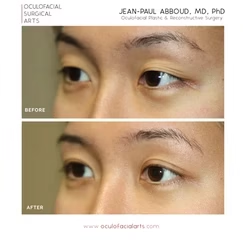

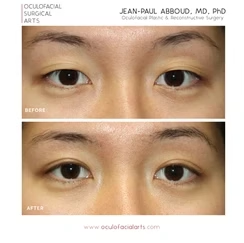

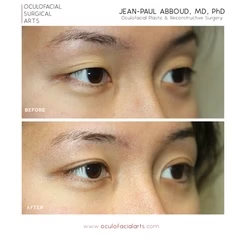
Surgical Techniques: Incisional vs. Non-Incisional
There are two main approaches to double eyelid surgery, and choosing the right one depends on a patient’s anatomy, aesthetic goals, and skin characteristics:
-
Incisional Technique: This is my preferred technique. This method involves making a small incision along the future crease line, allowing for removal of excess fat and skin. It’s best suited for patients with thick skin or excess upper eyelid tissue. The results are long-term – often permanent – and more defined.
-
Non-Incisional (Suture) Technique: This technique uses sutures to create a crease without making an incision. It’s ideal for patients with thin eyelid skin and minimal fat. The results, however, are often temporary and do not last as long as the incisional method.
What to Expect Before and After Surgery
Prior to surgery, patients undergo a thorough consultation that includes eyelid measurements, photographic documentation, and a discussion of desired outcomes.
Recovery Timeline:
-
Day 1–3: Swelling and mild discomfort are expected. Cold compresses and eye ointments are typically prescribed.
-
Week 1: Sutures are removed. Bruising and puffiness begin to subside.
-
Week 2–3: Most patients feel comfortable returning to work and social engagements.
-
2–3 Months: Near final results are visible, with natural-looking creases fully formed.
Makeup can typically be resumed after 14-28 days, and sun protection is critical to avoid pigment changes in healing skin.